Lineage

The lineage of the art, as set out by Ian Cameron.

  • Sepia-toned parchment background with dark, ornate floral flourishes in the corners and a clear center.

    ZHANG SAN FENG

    Legendary Daoist figure traditionally linked with the early roots of Tai Chi and internal martial arts.

    Button
  • Sepia-toned parchment background with dark, ornate floral flourishes in the corners and a clear center.

    WANG TSUNG YUEH

    Associated with early Tai Chi writings that shaped principles such as yielding, balance, and sensitivity.


    Button
  • Sepia-toned parchment background with dark, ornate floral flourishes in the corners and a clear center.

    JIANG FA

    A traditional lineage figure who connects the early roots of Tai Chi with later family transmissions.


    Button
  • Sepia-toned parchment background with dark, ornate floral flourishes in the corners and a clear center.

    CHEN CHANG HSIN

    An important teacher in the Chen family line and traditionally recognised as the teacher of Yang Lu Chan.


    Button
  • Sepia-toned parchment background with dark, ornate floral flourishes in the corners and a clear center.

    YANG LU CHAN

    Founder of Yang-style Tai Chi, whose teaching helped bring the art into wider public view.


    Button
  • Sepia-toned parchment background with dark, ornate floral flourishes in the corners and a clear center.

    CHUAN YU

    An important transmitter in the line leading to Wu-style Tai Chi and father of Wu Chien Chuan.

    Button
  • Sepia-toned parchment background with dark, ornate floral flourishes in the corners and a clear center.

    WU CHIEN CHUAN

    Founder of Wu-style Tai Chi and one of the key figures in its public development.


    Button
  • Sepia-toned parchment background with dark, ornate floral flourishes in the corners and a clear center.

    CHENG WING KWONG

    Disciple of Wu Chien Chuan and an important early teacher of Cheng Tin Hung.


    Button
  • Sepia-toned parchment background with dark, ornate floral flourishes in the corners and a clear center.

    WANG TAN LING

    A significant teacher in the parallel branch that also contributed to Cheng Tin Hung’s lineage.


    Button
  • Sepia-toned parchment background with dark, ornate floral flourishes in the corners and a clear center.

    JIN YI

    A transmitter in this branch of the lineage, linking Wang Tan Ling to Chi Min Chien.


    Button
  • Sepia-toned parchment background with dark, ornate floral flourishes in the corners and a clear center.

    CHI MIN CHIEN

    An important teacher of Cheng Tin Hung, adding depth to his martial inheritance.


    Button
  • Sepia-toned parchment background with dark, ornate floral flourishes in the corners and a clear center.

    CHENG TIN HUNG

    A Hong Kong master known for a practical, martial approach and a complete Tai Chi system.


    Button
  • Sepia-toned parchment background with dark, ornate floral flourishes in the corners and a clear center.

    IAN CAMERON

    Brought Cheng Tin Hung’s system to Scotland and founded the Five Winds School.

    Button

The line the art has passed through

Tai Chi is passed hand to hand — teacher to student, one generation to the next. This is the lineage Five Winds stands in, as set out by Ian Cameron: from its legendary origins to Grandmaster Cheng Tin Hung, and to Ian himself.

A Living Transmission

A lineage is only as real as what survives the handing on. It is not a list of names collected after the fact. It is a living transmission, passed hand to hand, teacher to student, with the principle kept intact at every step. 
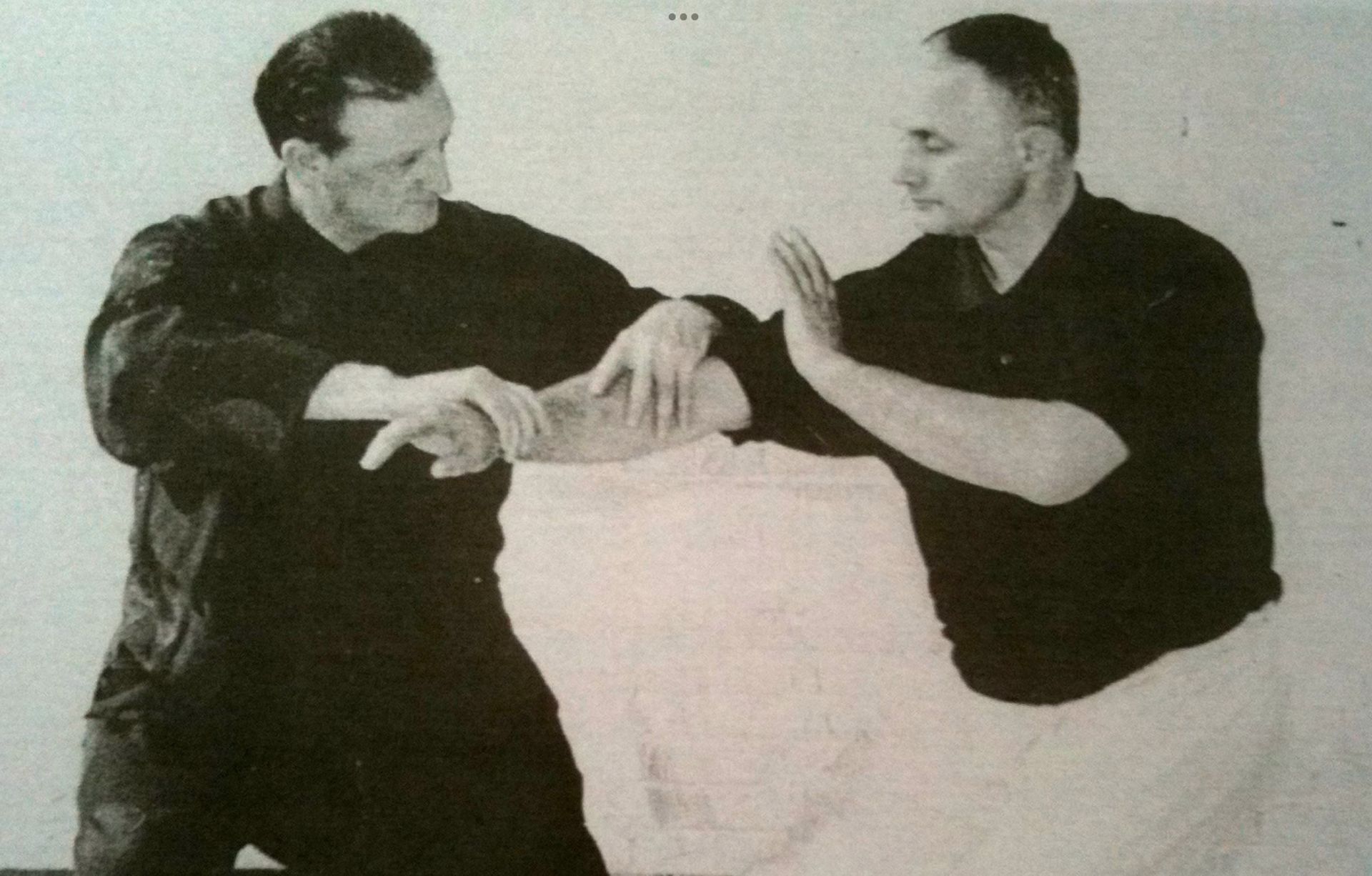
Two men in dark clothing face each other, gesturing over a white cloth-covered table.
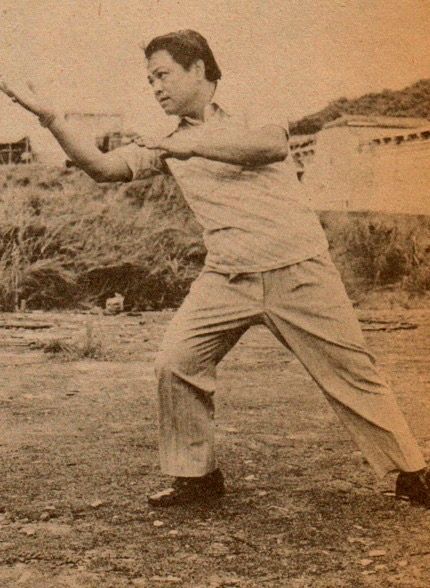
Sepia-toned photo of a person practicing martial arts outdoors, holding a wide stance with one arm extended.

The Founder

In 1971, Ian Cameron got himself posted to Hong Kong with the army for one reason: to find a real Tai Chi master. He asked in a local sports shop where to learn, and the owner gave him three words — "he is the best" — and a name: Cheng Tin Hung.

The Master

Cheng was no gentle park instructor. He had worked as a bodyguard, won tournaments, and beaten the Champion of Taiwan. Ian trained under him for years, and came home as the first person to bring this system to the West.


The Oldest Tai Chi School in Scotland

What he brought back was not a collection of forms. It was a complete understanding of the principle beneath them — taught as one connected art rather than five separate skills. The school he founded took the name Five Winds, for those five aspects.

The Five Aspects

Black-and-white yin-yang symbol, with a circular design divided into contrasting curved halves and two dots.

Hand Form

A black magic wand with a pointed tip and small sparkle marks on a white background.

Weapons

Outline of a hand with an arrow pointing to the right.

Pushing Hands

A shield icon with a black left half and a white right half, outlined in black.

Self-Defence

Black outline of a stylized flame on a white background.

Internal Strength

"The hand form, pushing hands, applications, weapons, and internal training should each be given equal importance. Each one supports and develops the others. Together they form one complete art." — Ian Cameron


Carried Forward

The lineage ends with Ian. What comes after it is not another name on the chart — it is the work of keeping the art alive and passing it on.

That work is carried here by Malcolm Pollock, who trained under Ian Cameron for thirty years. Not a master in the line, but a student of it — teaching the same foundations, in the same lineage, one honest step at a time.


Same Foundations

The art is taught as Ian received it — complete, undivided, and principled.

Same Lineage

Thirty years of direct training under Ian Cameron, carrying the transmission forward.

One Honest Step at a Time

Not a claim of mastery, but a commitment to faithful, careful teaching.


Black-and-white yin-yang symbol, with two contrasting halves and a dot in each.

Five Winds is the oldest Tai Chi school in Scotland — a living continuation of a lineage passed hand to hand, teacher to student, from legendary origins to the present day.